A clinical case that exposes what’s broken in conventional TMJ care — and how functional diagnosis changes everything
The Problem No One Explains Properly
TMJ disorders are not rare.
But correct TMJ care is.
Every week, we meet patients who have done everything right—
seen multiple doctors, followed advice, taken medications—
and are still living in pain.
Not because TMJ is untreatable.
But because it is frequently misunderstood.
The Harsh Reality of TMJ Care Today
Most TMJ patients have heard at least one of these:
- “It’s just stress.”
- “Your scans look normal.”
- “Try painkillers or muscle relaxants.”
- “Let’s inject the joint.”
- “You’ll have to live with it.”
Yet their pain persists.
They are sent from dentist → ENT → neurologist → orthopaedician,
collecting prescriptions—but never answers.
TMJ patients don’t fail treatment.
Treatment fails TMJ patients.
A Case That Represents Thousands
Rachna Bellapu
25 years | Female | Software Engineer
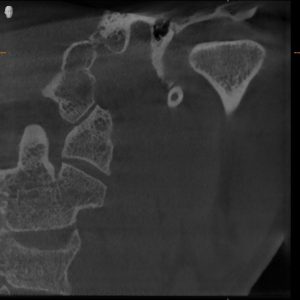
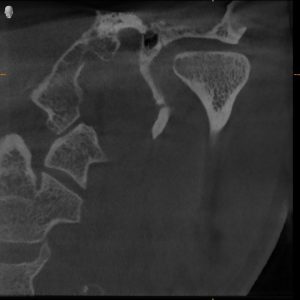
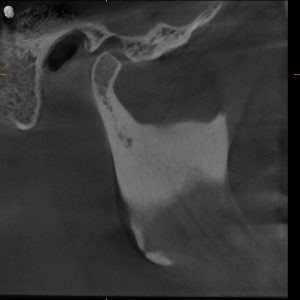
Rachna came to us after months of escalating symptoms and failed interventions.
She was dealing with:
- Severe restriction in mouth opening
- Persistent jaw and facial pain
- Facial muscle fatigue
- Clicking and discomfort in the TMJ
- Previous injections directly into the joint
The injections worked.
For seven days.
Then everything returned.
That short-lived relief was not success.
It was a diagnostic red flag.
Why Temporary Relief Is a Warning Sign — Not a Win
If a TMJ treatment:
- Works only briefly
- Needs repeated interventions
- Reduces pain but doesn’t improve function
👉 It never addressed the real cause.
In TMJ disorders, this almost always means:
- Muscles were ignored
- Occlusion was ignored
- Airway influence was ignored
- Jaw position was guessed — not measured
Pain relief without functional correction is not treatment.
It’s delay.
The Biggest Mistake in TMJ Evaluation
TMJ is not one joint.
It is a functional system.
Yet most evaluations:
- Look only at X-rays
- Focus only on the joint
- Ignore muscle behavior
- Ignore airway demands
- Ignore how teeth force the jaw to function daily
When function is ignored, relapse is inevitable.
Our Philosophy: Ask a Better Question
We do not ask:
“Where does it hurt?”
We ask:
“Why is your jaw forced to work this way every single day?”
Because pain is the outcome — not the diagnosis.
How We Evaluate TMJ Differently
Every TMJ patient in our practice undergoes a structured functional assessment, including:
- Detailed functional history
- Mandibular movement analysis
- Muscle-driven pain mapping
- Occlusal instability assessment
- TMJ loading evaluation
- Airway screening
- Targeted 2D / 3D imaging only when it changes management
No shortcuts.
No symptom-only decisions.
The Diagnosis That Changed Everything
Rachna was diagnosed with:
Chronic, muscle-dominant Temporomandibular Disorder
driven by occlusal instability and functionally unstable mandibular positioning influenced by airway demands
In simple terms:
Her jaw was never in a stable position — even at rest.
Why the Injections Failed
Injections reduce inflammation.
They do not correct jaw position.
So when the jaw returned to the same unstable position:
- Muscles re-spasmed
- Joint overload returned
- Pain followed
Exactly as expected.
The Treatment That Finally Worked
We followed a strictly reversible, evidence-based TMJ protocol, built around function — not force.
Phase 1: Neuromuscular Deprogramming
Where real relief begins
- Precision-designed therapeutic splint
- Joint decompression
- Muscle relaxation
- Establishment of a repeatable, stable mandibular position
This is where many patients feel relief for the first time in years.
Phase 2: Functional Stabilization
Beyond pain scores
- Objective improvement in jaw movement
- Mouth opening normalized
- Muscle tenderness reduced
- Daily activities restored
Pain relief mattered — but function mattered more.
Phase 3: Long-Term Stability Planning
Because improvement without stability always relapses
- Occlusion evaluation
- Airway considerations
- Long-term jaw position planning
TMJ that improves but isn’t stabilized will return.
The Outcome
- Mouth opening significantly improved
- Pain reduced dramatically
- No dependency on medications
- No repeated injections
- No relapse during follow-up
But the most important outcome?
The patient finally understood her condition —
and why it had never been solved before.
What Most Clinics Won’t Say — But Should
If TMJ treatment consists only of:
- Painkillers
- Muscle relaxants
- Generic splints without diagnosis
- Injections without functional correction
You are managing symptoms, not treating TMJ.
A Message to Patients
If you experience:
- Jaw pain
- Clicking or locking
- Difficulty opening your mouth
- Facial pain or headaches
- Ear pressure with “normal” ENT reports
- A history of failed TMJ treatments
👉 Your pain is real
👉 Your condition is diagnosable
👉 And it is treatable — when evaluated correctly
You don’t need another opinion.
You need the right evaluation.
A Message to Doctors & Specialists
When patients present with:
- Persistent facial pain
- Jaw dysfunction
- Unexplained ear symptoms
- Failure of conservative care
Please remember:
TMJ disorders require functional dental evaluation — not repeated symptomatic management.
Early referral prevents:
- Chronic pain cycles
- Psychological distress
- Irreversible joint damage
Final Word
TMJ is not rare.
Correct TMJ care is.
This case is not an exception —
it is what happens when:
- TMJ is treated as a system
- Diagnosis precedes treatment
- Long-term stability is prioritized over short-term relief
And that is how TMJ patients finally get their lives back.